
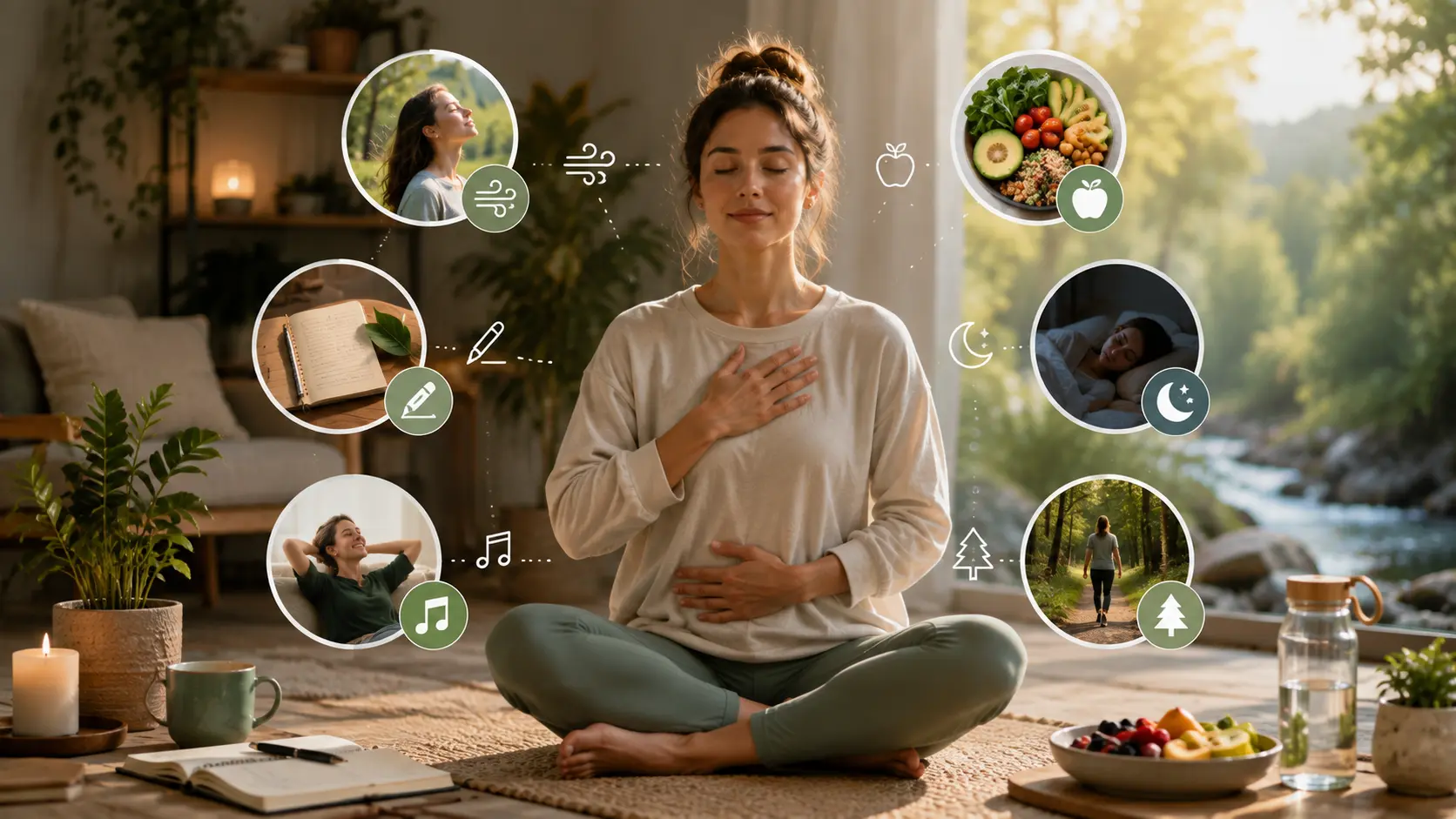
If you often feel stressed, overwhelmed, or anxious, learning how to regulate your nervous system naturally can help restore balance to your body and mind. Simple daily habits—such as practicing deep breathing exercises, spending time in nature, getting gentle movement, and splashing cold water on your face—can activate your body’s relaxation response. By consistently using these simple techniques, you can lower your stress levels, improve your sleep, and build long-term emotional resilience.
Ever feel wired for no reason? Heart racing during a normal Tuesday, jaw tight, mind jumping from one worry to the next — even when nothing is actually wrong? That’s not you being dramatic. That’s your nervous system stuck in the “on” position. And the good news is you can teach it to settle back down, starting today.
What Does It Mean to Regulate Your Nervous System Naturally?
Your body is mostly run on two systems. Sympathetic nervous system is the gas and parasympathetic is the break. Gas makes your heart pound, muscles tense up and prepares us to fight or flee. This is our default setting when were stressed. The break lets us relax, digest food, and do other things needed to maintain our bodies. Poor sleep, brain fog, irritable emotions, and digestion issues are all symptoms of being in a constant state of fight or flight and not having enough break time for the body to reset and recover.
The vagus nerve is the primary break for our nervous system. This nerve is located in the brainstem and runs down the body through the throat, lungs, heart, and gut. By stimulating it we send our nervous system clear signals that it’s safe to engage our parasympathetic or “rest and digest” system. Basically the nerves job is to bring physical awareness to your body that the danger has passed so your body can lower its defenses.
1. Slow Down Your Breathing
This is your fastest available tool, and it is free. Practice a 4 count in on 6 or more count out. It is the exhalation that causes the parasympathetic reaction, so lengthening that is key. Do it for three minutes before an important meeting or right after a difficult conversation and you will see a drop in your heart rate.
2. Try Cold Water on Your Face
Splash cold water on your face, or end your shower with 30 seconds of cold water. This triggers something called the dive reflex, which slows your heart rate almost instantly. It sounds too simple to work, but it’s one of the quickest resets available.
3. Hum, Sing, or Gargle
Odd as it sounds, your vocal cords and throat muscles sit right along the path of the vagus nerve. Humming a song, gargling water for 30 seconds, or even singing loudly in the car all stimulate that same calming pathway.
4. Move Your Body — But Not Just Any Movement
Gentle exercises such as walking or stretching and even yoga can send a signal to your body that it’s finally safe to unwind. More strenuous activities also help, just not as quickly: studies on people who do aerobic exercises suggest that it takes about eight weeks of moderately intense workouts to see a significant increase in heart rate variability, which is a sign of the body’s ability to recover from stress. Think of breathing techniques as a short-term cooldown and physical activity as an investment that pays off over time.
5. Get a Gentle Massage — Even a Self-Massage Works
Massaging certain parts of your body may lower your stress levels and make you feel calmer. Scientists have uncovered that a simple four week trial of foot reflexology raises vagal tone by 10%. Vagal tone helps control blood pressure, which means that it can also help to reduce it. You don’t even have to see a therapist; a two minute massage before bedtime can suffice.
6. Get Outside and Let Yourself Feel Awe
Watching a sunset, standing under tall trees, or looking up at the stars does something measurable to your stress response. Awe shifts your focus outward and away from your own racing thoughts, which quiets the sympathetic system almost as a side effect.
7. Fix Your Sleep Environment Before You Fix Your Sleep Habits
A dark, cool, quiet room does more for your nervous system than any bedtime routine on its own. Your body reads light and noise as signals of danger or safety. A room that feels genuinely safe to sleep in gives your nervous system permission to fully power down.
8. Pay Attention to Your Gut
About 80% of the vagus nerve’s fibers carry signals upward, from your gut to your brain — not the other way around. That means chronic bloating, irregular digestion, or gut inflammation can keep your nervous system on edge without you realizing why. Fiber, fermented foods, and consistent meal timing all support this gut-brain connection.
9. Name What You’re Feeling, Out Loud
This is probably too simplistic, but try naming the emotion as you feel it, rather than the emotion itself. Instead of saying “I’m anxious!” try stating “I’m feeling anxious.” This can help to activate your amygdala which controls your emotion processing, but suppresses it when you are trying to label an emotion rather than feeling it.
This is what psychologists refer to as “affect labeling”, and this also works if you are the only one who hears it.
10. Build In Recovery, Not Just Relaxation
Watching TV can be relaxing but it doesn’t always allow the body to truly relax. A true relaxation of the body, deep breathing and a good time in nature can allow the nervous system to truly reset itself instead of just being distracted.
How Long Does It Take to See Results?
Quick interventions like breathing and cold water act within minutes. However, more involved techniques such as enhancing sleep or exercise and gut health require four to eight weeks of frequent and consistent practice to begin to have lasting effects. The key is to keep doing it. Your body’s nervous system uses repetition to create enduring change.
When to Talk to a Professional
If anxiety, panic, or exhaustion are interfering with your day-to-day life, they may benefit from the help of these natural approaches, in addition to – rather than instead of – therapy or medical care. Working with a therapist or doctor can help ensure that these remedies are appropriate for you and support your overall treatment plan.
Frequently Asked Questions
What is the fastest way to calm your nervous system down? Slow, extended exhales are the fastest tool available. Breathing in for 4 seconds and out for 6 or more seconds directly signals your body to relax, often within a few minutes.
Can you regulate your nervous system without therapy? Yes. Many nervous system tools — breathing, cold exposure, movement, and gentle touch — are self-directed and don’t require professional guidance. Therapy becomes helpful when stress is chronic, severe, or tied to trauma.
What foods help regulate the nervous system? Fiber-rich foods, fermented foods like yogurt and kimchi, and consistent meal timing support the gut-brain connection, since a large share of nervous system signals travel from the gut to the brain.
Is nervous system dysregulation the same as anxiety? Not exactly. Dysregulation describes a body stuck between stress and calm, which can show up as anxiety, but also as fatigue, irritability, or digestive issues. Anxiety is one possible symptom, not the whole picture.
How do I know if my nervous system is dysregulated? Common signs include trouble sleeping, feeling wired but tired, quick irritability, digestive issues, and difficulty calming down even when nothing is actively wrong.
The Bottom Line
You don’t need special equipment or hours of free time to regulate your nervous system naturally. A slower exhale, a splash of cold water, or two minutes of self-massage can shift your body’s state in real time.

