
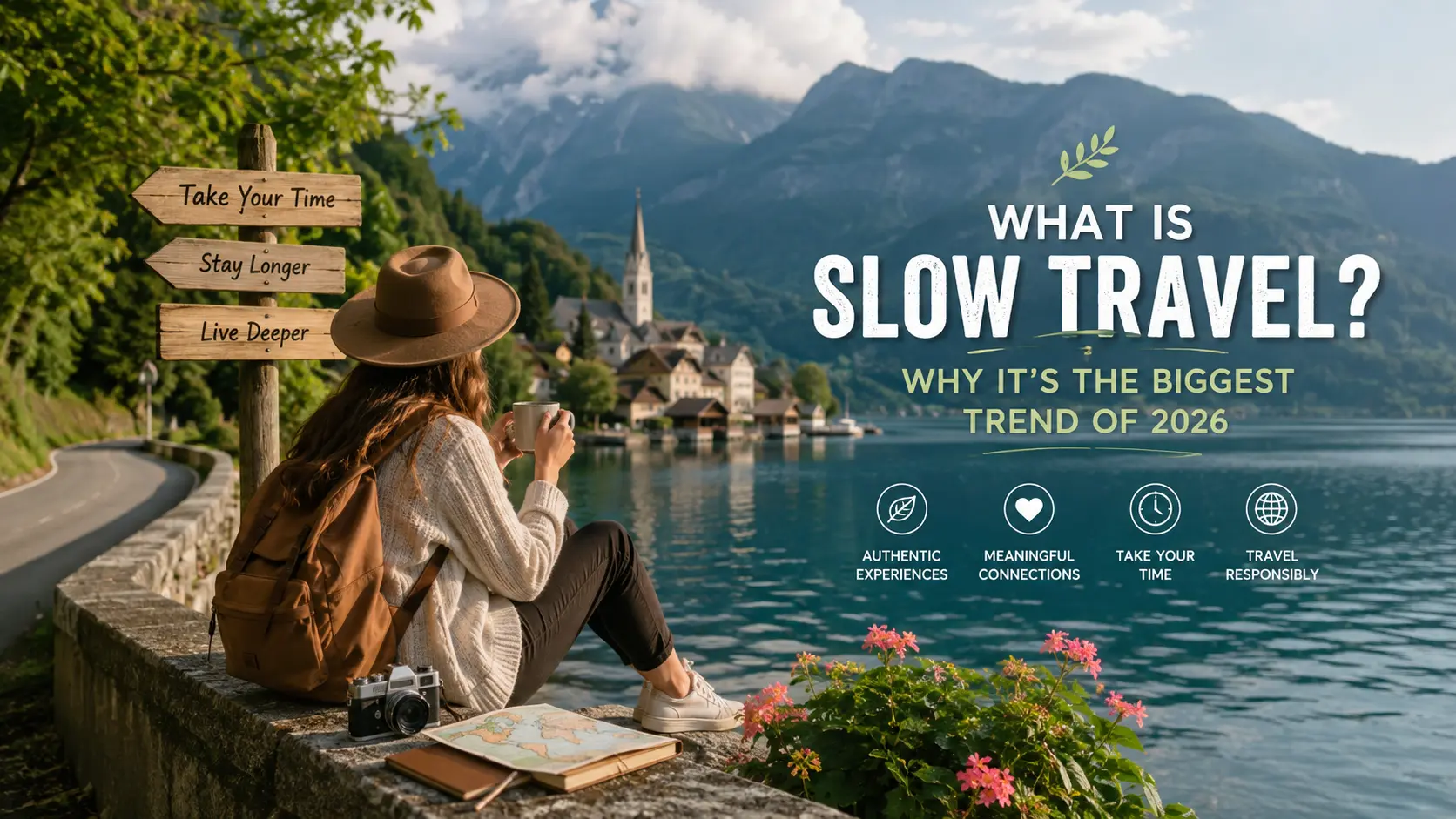
Ever come home from a vacation more tired than when you left? You’re not alone, and a lot of travelers have decided to fix it the simple way: stop rushing. Slow travel means staying longer in one place, doing less, and actually enjoying it. It’s turned into one of the biggest travel trends of 2026, and once you see how it works, you’ll understand why.
What Is Slow Travel, Exactly?
Slow travel means spending more time in fewer places instead of racing through a checklist of cities. Instead of hitting five countries in ten days, you pick one town and stay a week or two. You walk instead of grabbing a taxi. You cook a meal from the local market instead of eating every dinner at a restaurant built for tourists.
According to Vrbo, 91% of travelers now say they want slower, simpler trips built around rest, nature, and real experiences instead of packed schedules. That’s not a small niche anymore. That’s most people.
The idea isn’t new. It grew out of the Slow Food movement, which started in Italy in 1989 as a pushback against fast food and rushed meals. Slow travel applies that same thinking to vacations: fewer stops, more depth, less stress.
Why Slow Travel Took Off in 2026
A few things came together at once to push slow travel from a niche idea into the default way people vacation.
People are burned out. Years of cramming ten landmarks into a week left a lot of travelers exhausted instead of refreshed. A 2026 KAYAK report found that over 60% of travelers now rank a mental reset as their top priority when planning a trip, ahead of sightseeing or price.
It’s genuinely cheaper. Airbnbs, guesthouses, and hotels often knock 20 to 40% off the nightly rate for stays of a week or longer. Skip the constant flights and train tickets between cities, and the savings add up fast.
It’s better for the planet. Staying put and using trains or buses instead of short-haul flights can cut a trip’s carbon footprint dramatically. Fewer flights and less luggage-hauling also means less waste overall.
Social media caught on. The hashtag #slowtravel jumped 330% in mentions heading into 2026. People are sharing quiet mornings in small towns instead of blurry photos taken from a moving bus.
A cultural shift toward “less but better.” Travelers like Farcia Harvey, who spent a birthday weekend exploring Cincinnati’s streetcars, bakeries, and riverfront instead of jetting to Europe, are proof that a meaningful trip doesn’t need a passport stamp. Her story went viral because it struck a nerve: people are tired of chasing bucket lists.
Slow Travel vs. Traditional Travel
| Traditional Travel | Slow Travel | |
| Pace | Multiple cities in one trip | One or two places, longer stay |
| Planning | Packed, hour-by-hour itinerary | Loose plan, room to wander |
| Spending | Short hotel stays, frequent transport | Weekly rental discounts, less transport |
| Experience | Landmark checklist | Local routines and connections |
| Transport | Flights between cities | Walking, cycling, trains |
| Result | Often exhausting | Often restorative |
What Slow Travel Actually Looks Like
Slow travel isn’t one fixed formula, but a few patterns show up again and again.
- Long stays over short hops — instead of two nights in five cities, it’s nine nights in one neighborhood.
- Farm stays and rural trips — data from Expedia, Vrbo, and Hotels.com shows 84% of travelers now want to stay on or near a farm at some point in 2026, trading room service for chicken coops and vineyard rows.
- “No-think” holidays — a local host handles the details so you can just exist in a place without constant planning.
- Reading retreats — book-club style getaways, where the main activity is a porch, a book, and nowhere to be, are quietly booming and often sell out.
- Walking the last mile — once you land, ditch the taxi. Architecture and street life show up a lot more clearly on foot.
How to Plan Your First Slow Trip
You don’t need a sabbatical to try this. Start smaller.
- Pick one place, not five — a single city or region for your whole trip.
- Book at least five nights there — long enough to unlock weekly rate discounts and settle into a routine.
- Leave half the itinerary blank — save room for a local tip, a rainy afternoon, or a market you stumble into.
- Skip the tourist-strip restaurants — menus in five languages usually mean food built for speed, not flavor. Look for small spots with a short menu in the local language.
- Get off the phone — download offline maps ahead of time so you’re not staring at a screen instead of the street in front of you.
- Choose ground transport when you can — trains and buses between nearby towns cut costs and emissions compared to short flights.
Is Slow Travel Right for Everyone?
Not every trip fits this mold, and that’s fine. A quick weekend visiting family or a work trip with a packed schedule doesn’t need to become a slow-travel experiment. But if your last vacation left you needing a vacation from your vacation, slow travel is worth trying at least once. Start with one extra-long stop instead of overhauling the whole trip.
Frequently Asked Questions
Is slow travel more expensive than regular travel?
Usually not. Weekly and monthly rental discounts, fewer flights, and less spending on transport between cities often make slow travel cheaper overall, even with a longer trip.
Do I need a lot of vacation time for slow travel?
No. Slow travel is about pace, not length. A four-day weekend spent entirely in one small town still counts, as long as you’re not racing between sights.
What’s the difference between slow travel and budget travel?
Budget travel focuses mainly on cutting costs. Slow travel focuses on depth and pace, though it often ends up cheaper as a side effect.
Is slow travel good for families?
Yes, often better than a packed itinerary. Kids tend to do well with routine, and a slower pace means fewer meltdowns from too much moving around.
What destinations work best for slow travel?
Smaller towns, rural regions, and less-crowded neighborhoods within bigger cities tend to work best, since they leave room to settle in without the crowds of major landmarks.
Can I slow travel solo?
Absolutely. Solo trips often work especially well for slow travel since there’s no group schedule to coordinate around.
The Bottom Line
Embracing slow travel isn’t just about changing how you vacation—it’s about changing how you recharge. By giving yourself permission to trade packed schedules for present moments, you return home genuinely refreshed and with stories that go deeper than standard tourist photo ops.
