
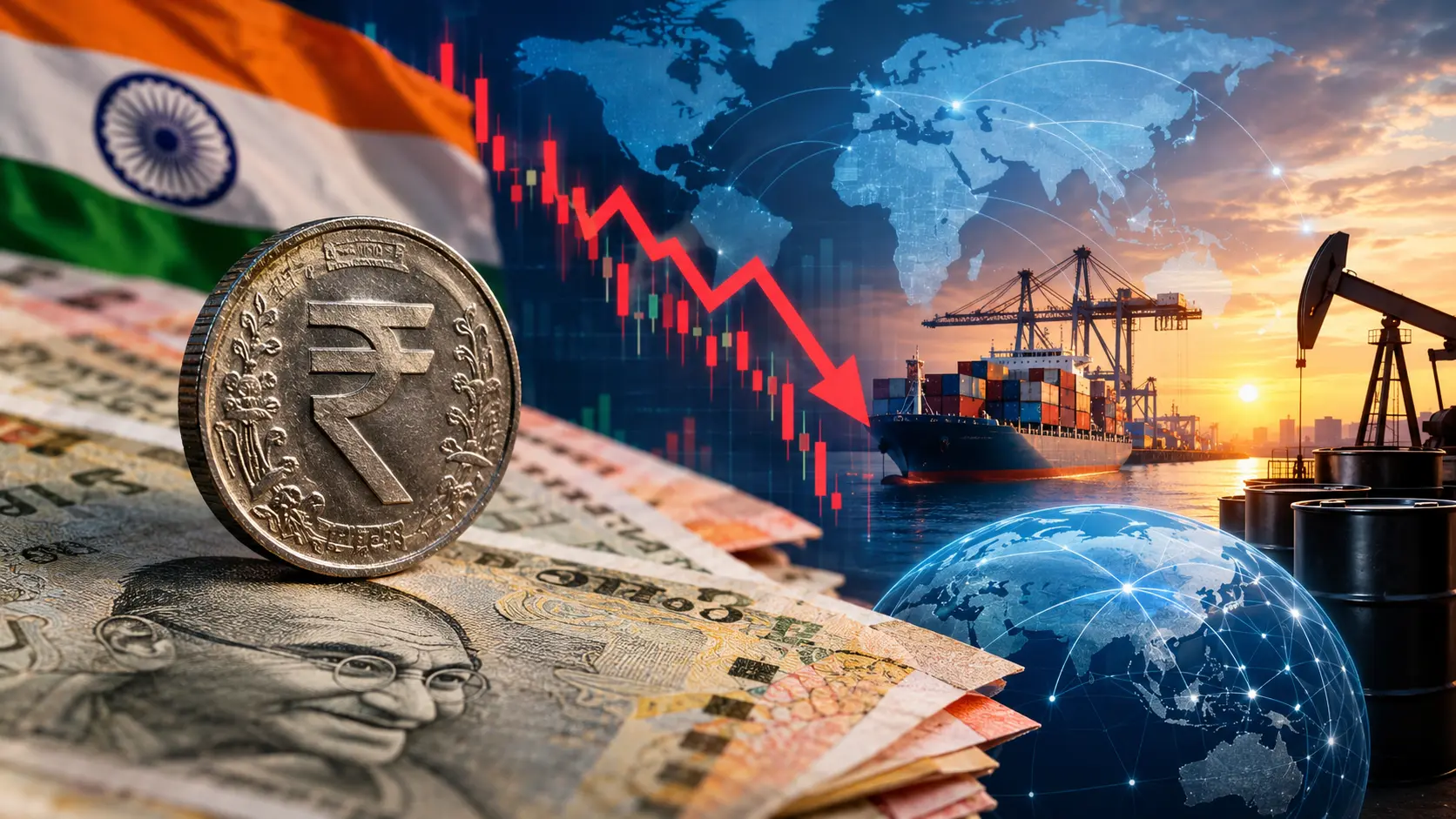
| Quick Answer The Indian rupee is falling mainly because of costly oil imports, foreign investors pulling money out of Indian markets, and a strong US dollar backed by high American interest rates. In early September 2026, one US dollar buys around 94-95 rupees, one of the weakest levels on record. A weaker rupee raises prices for Indian households and can add pressure to global trade and inflation, since India is one of the world’s largest economies. |
Why is the Indian rupee falling to historic lows against the US dollar in 2026? While currency values naturally fluctuate every day, recent sharp declines have raised major concerns for both investors and everyday consumers.
Let’s break it down in plain terms — no jargon, no finance-degree required.
What Does It Actually Mean When the Rupee “Falls”?
Think of any currency like a price tag. If the rupee falls against the dollar, it simply means you need more rupees to buy the same one dollar. A few years ago, one dollar cost around 83 rupees. Today, it costs close to 95. That’s not a small dip — it’s a meaningful drop in value in a fairly short space of time.
For India, this matters because so much of daily life runs on imported goods priced in dollars, especially oil.
Why Is the Indian Rupee Falling? The Main Reasons
1. Expensive Oil Bills
India buys most of its crude oil from abroad, and oil is priced in US dollars. When oil prices climb, India needs to buy more dollars to pay for it, and that pushes the rupee down. Tensions in the Middle East pushed oil prices sharply higher earlier in 2026, and that shock hit the rupee hard.
2. Foreign Investors Pulling Their Money Out
Big global investors move billions of dollars in and out of countries looking for the best returns. When they sell Indian shares and bonds, they convert those rupees back into dollars to take the money home. Large-scale selling means large-scale demand for dollars, and that weakens the rupee further.
3. A Strong US Dollar
The US dollar has been the “safe” choice for a lot of investors lately, partly because American interest rates have stayed high. Higher rates in the US make dollar savings more attractive than rupee savings, so money naturally flows toward the dollar — and away from currencies like the rupee.
4. Trade Tensions and Tariffs
Talk of US tariffs on Indian goods has added another layer of pressure. Tariffs can make Indian exports less competitive, which weakens the flow of dollars coming into the country from trade, adding yet more strain on the currency.
What the Reserve Bank of India Is Doing About It
India’s central bank, the Reserve Bank of India (RBI), doesn’t simply let the rupee crash freely. It steps in from time to time, selling some of its dollar reserves to calm the market and slow a sharp fall. India holds a large stockpile of foreign currency reserves for exactly this reason — think of it as a financial shock absorber. It can soften a bumpy ride, but it can’t stop the road itself from being bumpy if global pressures keep building.
What Does This Mean for the Global Economy?
India is one of the largest economies on the planet, so what happens to the rupee doesn’t stay inside India’s borders.
- Higher import costs for India mean higher prices for everyday goods, from fuel to electronics, which can push up inflation.
- Costlier overseas trips and tuition for Indian families, since it now costs more rupees to buy dollars, pounds, or euros for holidays or education abroad.
- Global companies with business in India can feel the pinch too, since profits earned in rupees are worth less once converted back into dollars.
- Wider signal for emerging markets — when a major currency like the rupee wobbles, it often reflects pressures other developing economies are facing too, like expensive oil and cautious global investors.
- Cheaper Indian exports at least in theory, since a weaker rupee can make Indian-made goods more affordable for overseas buyers — a rare silver lining in an otherwise tough situation.
What Could Happen Next?
Currency forecasts are never a sure thing, but most economists agree the rupee’s future largely depends on oil prices, how long US interest rates stay high, and whether foreign investors regain confidence in Indian markets. A calmer oil market or a shift in US rate policy could ease the pressure. A fresh geopolitical shock could do the opposite.
Key Takeaways
- The rupee has weakened to around 94-95 per US dollar in 2026, among its lowest levels ever
- Costly oil, investor outflows, and a strong dollar are the three biggest drivers
- The RBI manages the fall using foreign currency reserves, but it can’t fully control global pressures
- A weaker rupee raises living costs in India and ripples out to global trade and investment
Frequently Asked Questions
Why is the Indian rupee falling against the US dollar in 2026?
The rupee is falling mainly due to high oil prices, foreign investors withdrawing money from Indian markets, and a strong US dollar supported by high American interest rates.
What is the current rupee to dollar exchange rate?
As of early September 2026, one US dollar is worth roughly 94 to 95 Indian rupees, close to record lows.
Is a weaker rupee bad for India’s economy?
It’s mixed. It raises the cost of imports like oil and pushes up inflation, but it can also make Indian exports more affordable for overseas buyers, which helps some industries.
Can the Reserve Bank of India stop the rupee from falling?
The RBI can slow a sharp fall by selling dollars from its reserves, but it cannot fully control the rupee’s value if global pressures like oil prices and investor sentiment keep pushing it down.
How does the falling rupee affect the rest of the world?
Since India is a major global economy, a weak rupee can affect international trade, the profits of global companies operating in India, and signal wider pressure across other emerging market currencies.