
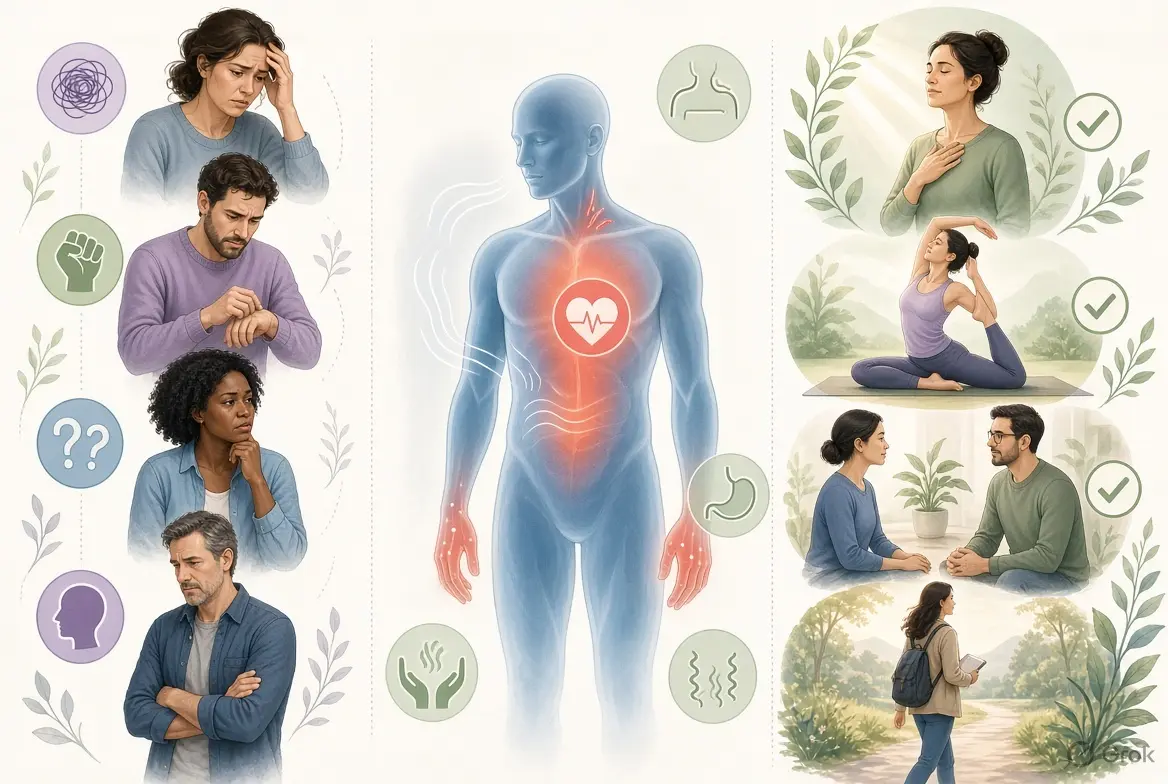
Anxiety Symptoms in Adults: Common Signs, Physical Effects and Treatment
Quick Answer: Anxiety in adults shows up as constant worry, restlessness, and trouble sleeping, plus physical effects like a racing heart, tight muscles, or stomach trouble that last most days for six months or more. Therapy, medication, or a combination of both are the most effective treatments.
Your heart races before a big meeting. Your stomach knots up on a Sunday night, thinking about Monday. Occasional worry like that is normal. But when the feeling doesn’t let up — when it follows you into ordinary days and starts running the show — you may be dealing with an anxiety disorder, not just stress.
What Counts as an Anxiety Symptom?
Anxiety disorders affect the highest percentage of the U.S. population, approximately 40 million people, or 19% of the U.S. population, according to the National Institute of Mental Health (NIMH) and are categorized as one of the most common mental health problems in this country. As such, it is essential to understand the difference between normal everyday anxiety and an anxiety disorder. The main distinction between these two terms lies in the duration of the symptoms, as well as their impact on a person’s life. Specifically, episodes of anxiety that occur more often and last for six months or longer, significantly disrupting one’s functioning, can be classified as an anxiety disorder.
Common Emotional and Mental Signs
Most people picture anxiety as a mental experience first, and for good reason. These signs tend to show up together rather than one at a time:
- Constant, hard-to-control worry
- Restlessness or feeling “on edge”
- Irritability, often over small things
- Trouble concentrating, or your mind going blank
- Fear of losing control or of a specific outcome
- Expecting the worst in ordinary situations
Physical Effects of Anxiety on the Body
Anxiety isn’t only in your head. It runs through your nervous system and can affect nearly every organ.
Heart and Breathing
A racing heartbeat, chest tightness, and shortness of breath are common. Anxiety triggers the same fight-or-flight response as real physical danger, even when nothing dangerous is actually happening.
Digestive System
Nausea, stomach cramps, and diarrhea show up often with anxiety. The gut and brain are in constant communication, so stress hormones hit your stomach almost as fast as they hit your mind.
Sleep and Energy
Trouble falling asleep, waking up at 3 a.m. with your mind racing, and feeling exhausted during the day despite being “wired” are classic anxiety effects.
Muscles and Body Tension
A clenched jaw, tight shoulders, tension headaches, and unexplained aches often trace back to anxiety rather than an injury.
Panic Attacks: When Anxiety Spikes
A panic attack is a sudden episode of intense fear that peaks quickly and is usually accompanied by physical symptoms, such as a pounding heart, sweating, shaking, dizziness, and a feeling that something terrible is about to happen. According to the NIMH, panic attacks “typically peak within 10 minutes…last for several minutes or up to an hour or more.” Additionally, a panic attack “may feel much like a heart attack.” That is why people having panic attacks sometimes go to the emergency room, thinking they are having a heart attack.
Anxiety Looks Different as You Age
Anxiety doesn’t present the same way at every stage of adulthood. In older adults, it’s frequently underdiagnosed because the symptoms overlap with real medical conditions like heart disease or thyroid disorders, and many people in that generation are less likely to describe what they feel in psychological terms. Left untreated, anxiety in later life is linked to a higher risk of cognitive decline, falls, and cardiovascular problems.
When to See a Doctor
Talk to a healthcare provider if:
- Anxiety keeps you from your normal daily activities
- Symptoms last longer than a week or keep coming back
- You have chest pain, a racing heart, or breathing trouble that could also signal a medical issue
- Worry feels impossible to control, even when you try
A medical checkup also helps rule out conditions — thyroid problems, heart arrhythmias, too much caffeine, or certain medications — that can mimic anxiety symptoms almost exactly.
Treatment Options That Work
Here’s the encouraging part: anxiety disorders are among the most treatable mental health conditions there are.
Therapy
Cognitive behavioral therapy (CBT) is the most studied and most effective talk therapy for anxiety. It teaches you to notice the thought patterns that feed your anxiety and replace them with more realistic ones.
Medication
SSRIs and SNRIs are the medications most commonly prescribed for ongoing anxiety. Beta blockers can ease physical symptoms, like a racing heart, in specific situations such as public speaking. Medication tends to work best when paired with therapy, not used as a stand-alone fix.
Lifestyle Changes
Regular exercise, consistent sleep, cutting back on caffeine, and simple breathing exercises won’t cure a diagnosed anxiety disorder by themselves. But they measurably reduce how intense symptoms feel on a day-to-day basis.
FAQ: Anxiety Symptoms in Adults
What is the most common symptom of anxiety in adults? Persistent, hard-to-control worry is the most reported symptom, usually paired with physical signs like restlessness, muscle tension, or trouble sleeping.
Can anxiety cause physical pain? Yes. Anxiety commonly causes headaches, muscle tension, chest tightness, and stomach pain, because stress hormones affect the whole body, not just the mind.
How long do anxiety symptoms need to last to count as a disorder? Generally six months or longer, along with symptoms that interfere with daily life, though panic attacks can be diagnosed after a much shorter pattern of recurring episodes.
Is anxiety the same as a panic attack? No. Anxiety is an ongoing state of worry, while a panic attack is a sudden, short, intense spike of fear with strong physical symptoms, usually peaking within 10 minutes.
Can anxiety go away without treatment? Mild, situational anxiety often fades once the stressor passes. A diagnosed anxiety disorder usually needs active treatment — therapy, medication, or both — to improve.
What’s the fastest way to calm anxiety symptoms? Slow, deep breathing, grounding techniques, and brief physical movement can ease symptoms in the moment, but they work best alongside longer-term treatment.
The Bottom Line
Anxiety symptoms are common, treatable, and nothing to be ashamed of. If worry has started running your days instead of the other way around, a conversation with a healthcare provider is the next right step — not years of just pushing through it.