
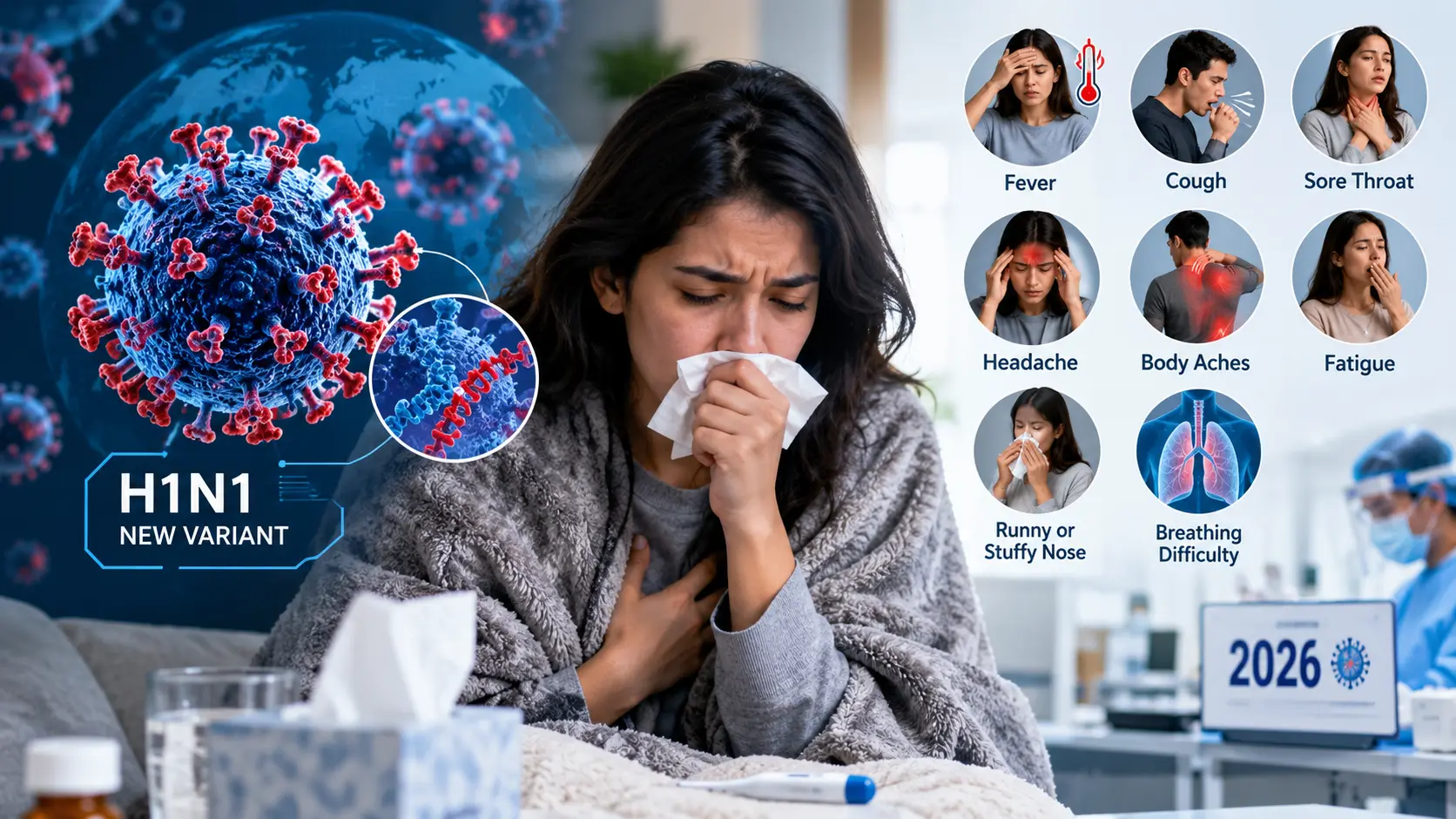
If you are wondering whether the new H1N1 flu variant brings different symptoms this season, you are not alone. As health experts track this year’s early and aggressive flu wave, understanding how this mutated strain affects your body is more important than ever.
What’s Going On With Flu This Year?
If it seems like everyone you know has the flu this year, it’s not your imagination. The 2026-2027 flu season appears to have started early, and it’s dominated by one particular strain. Flu season started earlier than usual this year, and it’s largely made up of H1N1, with 96.4 percent of the viruses typed by public health labs in late September being that subtype.
This year’s dominant flu strain is not the same H1N1 strain that was circling the world several years ago, however. Researchers have found that this year’s strain has a mutation that is generating some concern.
What Is the G155E Mutation?
Here’s the science-y version: The flu virus changes every year, just as software gets updated every year. This year’s updated version of the H1N1 virus is called G155E. Researchers at the Fred Hutchinson Cancer Center tested hundreds of blood samples against the most recent strains of the flu virus, and found that people who had been infected with previous forms of the H1N1 virus had reduced antibody response to the new G155E strain.
In other words: Your body’s natural defenses may have a harder time fighting this particular strain, even if you’ve had the flu or vaccination. This doesn’t mean that the vaccination isn’t effective (more on that in a sec), but it could mean that you might need a little extra help this year.
So, Does the New H1N1 Variant Cause Different Symptoms?
This is the question that has been asked thousands of times, and the answer is simple – mostly no, but with several additional symptoms.
Doctors who have been following the situation this season say that the usual symptoms have not changed. An infectious disease hospitalist stated that they are pretty much the same as in previous years. The telltale signs of the flu are the same – sudden, intense, and full-blown.
Typical H1N1 symptoms include:
- Sudden fever and chills
- Body aches and muscle pain
- Headache
- Sore throat
- Dry cough
- Runny or stuffy nose
- Feeling completely wiped out (fatigue and weakness)
- Watery, painful eyes
- Loss of appetite
Symptoms usually show up about 1 to 2 days after exposure, and they tend to come on quickly rather than build slowly like a cold does.
What’s Being Reported as “New” or More Common This Year
While the symptom list itself hasn’t dramatically changed, doctors are noticing a few patterns show up more often this season:
- More stomach trouble. Doctors are seeing a lot of GI complaints this flu season, including vomiting and diarrhea, alongside the usual symptoms.
- Breathing problems in some patients. Emergency room doctors have reported seeing more flu patients coming in with shortness of breath and low oxygen levels.
- Symptoms that improve, then suddenly crash. Some people feel like they’re getting better and then take a sharp turn for the worse — a pattern worth taking seriously.
- Possibly tougher on younger people. Because this year’s dominant strain hasn’t been seen by a lot of younger people before, some experts worry it could hit that age group harder than usual.
Kids May React Differently
In young children, the usual symptoms may show up more as fussiness or irritability, and kids are more likely than adults to also deal with ear pain, nausea, vomiting, or diarrhea.
Is This Flu Season More Severe Than Usual?
It depends on whom you ask, but the facts are terrifying. According to a French intensive care study of the 2025-26 season, 50 percent of them are H1N1, and the rest are H3N2, while the CDC has confirmed 280,000 flu-related hospitalizations and 12,000 deaths nationwide through January 2026.
The best news is that health officials have found no evidence of significantly more severe or different strains of the virus compared to previous seasons. It is more about the increased rate of infections and a reduced natural immunity to this particular strain of the virus, so you can’t say that it is a much more dangerous virus, causing an entirely different set of symptoms than what is typical for influenza.
Who Should Be Extra Careful?
- Children under 5, especially infants
- Adults 65 and older
- Pregnant women
- Anyone with asthma, diabetes, heart disease, or a weakened immune system
- People who haven’t had the flu or a flu shot in the last year or two (lower “fresh” immunity)
Does the Flu Shot Still Work Against This Strain?
Yes, but not perfectly. A flu researcher called the vaccine “partially mismatched” for the year against the G155E strains but said that it has enough similarity to boost protective antibodies, a reduction in protection rather than a failure of the vaccines. The vaccines this year are trivalent to protect against three viruses: influenza A H1N1, influenza A H3N2, and influenza B.
Getting vaccinated still lowers your chance of going to the hospital even though it was a partially mismatched year it’s just not a perfect protection for this year.
When Should You Call a Doctor?
Don’t wait it out if you notice any of these warning signs:
- Trouble breathing or shortness of breath
- Chest pain or pressure
- Bluish or grayish skin, lips, or nail beds
- Dizziness that won’t go away
- Signs of dehydration (not urinating much)
- Symptoms that seem to improve, then suddenly get much worse
- A fever that won’t break, especially in young children or older adults
Catching the flu early matters, since antiviral medication works best when started within the first 48 hours of symptoms.
Simple Ways to Protect Yourself This Season
- Get your flu shot, even with the partial mismatch — some protection beats none
- Wash your hands often, especially before eating
- Avoid close contact with sick people when you can
- Stay home and rest if you’re feeling unwell
- Keep high-touch surfaces (doorknobs, phones, remotes) wiped down
- Talk to your doctor early if you’re in a high-risk group
Frequently Asked Questions
Is the new H1N1 variant the same as the 2009 swine flu? It’s related. H1N1 is the same general family of virus that caused the 2009 pandemic, but it has changed over time, including this year’s G155E mutation.
Can you get the flu even after getting the flu shot? Yes. No flu shot is 100% effective, especially in a year with a partial strain mismatch. But vaccinated people are generally much less likely to end up hospitalized.
How long do H1N1 flu symptoms usually last? Most people start feeling better within 5 to 7 days, though fatigue and cough can linger for a couple of weeks.
Is this year’s flu more dangerous for kids than usual? Some doctors are watching this closely, since younger people may have less built-in immunity to this specific mutation. Vaccination is especially encouraged for kids 6 months and older.
What’s the difference between H1N1 and H3N2 symptoms? The core symptoms overlap heavily. H3N2 tends to hit older adults harder, while this year’s H1N1 strain is raising more questions about younger patients due to lower prior immunity.
Further Reading & Sources
- CDC – FluView Surveillance Reports
- Mayo Clinic – H1N1 Flu Symptoms and Causes
- CDC – 2025-2026 Respiratory Disease Season Outlook
This article is for general information only and isn’t a substitute for medical advice. If you or a loved one are showing warning signs of severe flu, contact a healthcare provider right away.