Quick answer: Measles Cases Surpass 4,400 in the US in 2026 Essay
“If you are wondering why Measles Cases Rising in the US in 2026 have become such a major public health emergency, understanding the early warning signs is more important than ever.”
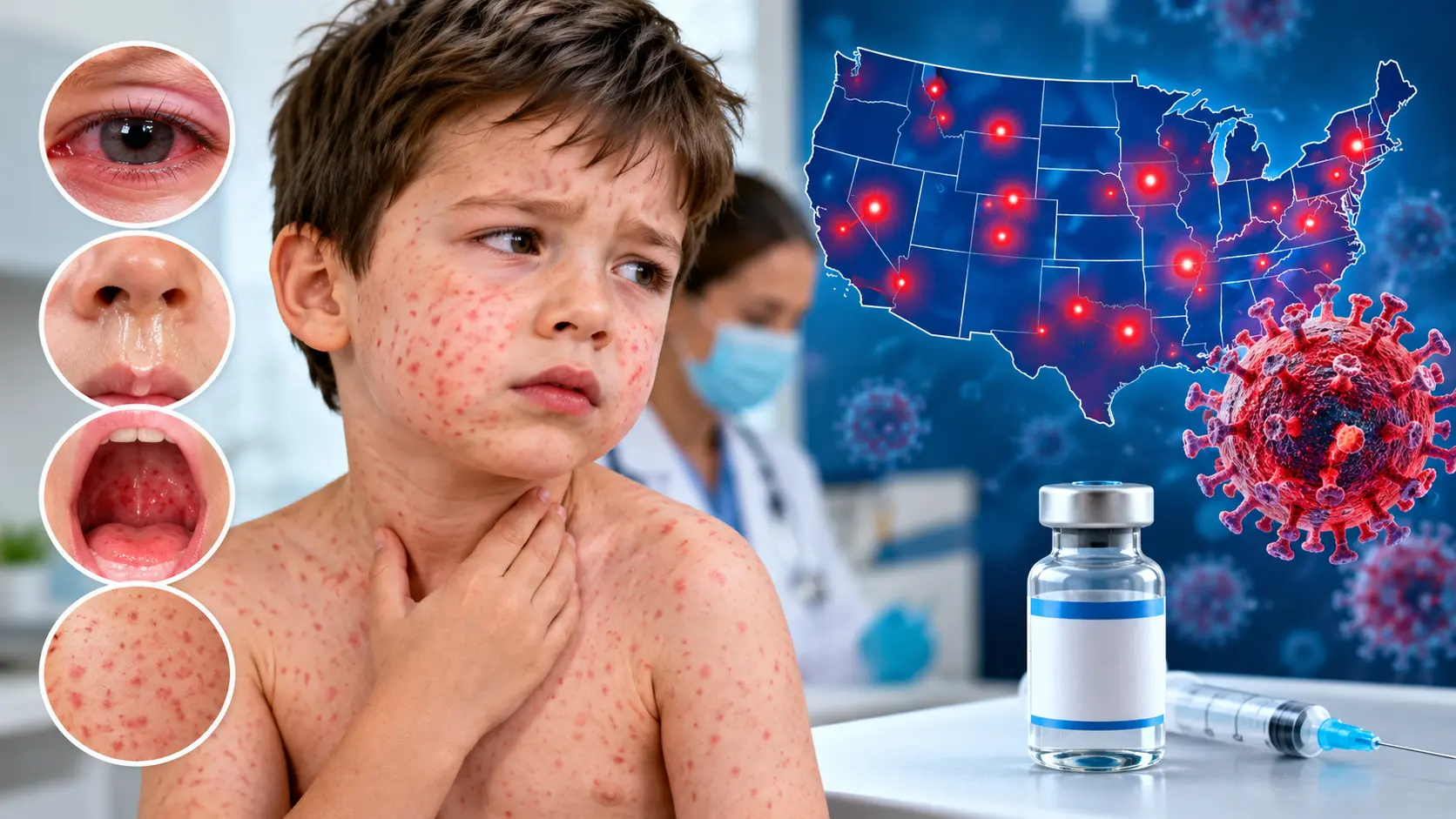
The number of reported measles infections in the United States has passed 4,400 cases in 2026, reaching the highest level in more than three decades, making the viral disease a major public health concern. Experts say the main explanation for the surge in illnesses is the drop in vaccination rates. Measles typically begins with a high fever, cough, runny nose, red and watery eyes, and tiny white spots in the mouth, which then disappear after a few days, followed by a red rash that begins on the face and spreads to the rest of the body.
Measles used to be a terrifying word for many parents in the United States since it was considered an illness that was prevalent in the past. However, this is no longer the case, and it is critical to understand why, as well as what symptoms to look for in children, parents, and even nursing mothers.
What’s Actually Happening With Measles Right Now?
The numbers speak for themselves. The CDC has confirmed more than 4,400 cases of measles in the United States this year, nearly double the number of infections reported in 2025, itself a 35-year high. Outbreaks have occurred in most states, including Pennsylvania, where there’s been the largest number of infections in the country this year, along with five confirmed deaths and more than 500 hospitalizations.
In addition, New York declared a state of emergency last month after large numbers of infections spread to the state, infecting hundreds of people in recent weeks. The virus has sparked concern throughout the country that the United States could lose its status as a measles-free country from 2000.
Why Are Cases Rising So Quickly?
Quick answer: Fewer children are getting vaccinated, and measles is one of the most contagious viruses on the planet.
A few things are driving the surge:
- Vaccination rates are slipping. Measles vaccine coverage among US kindergarteners dropped from around 95% in 2019–2020 to about 92% in 2025–2026. That might not sound like a huge difference, but measles needs roughly 95% community immunity to stop it spreading. Drop below that, and outbreaks take hold fast.
- Measles is extremely contagious. It spreads through the air when someone coughs or sneezes, and it can linger in a room for up to two hours after the person has left. One infected person can pass it to 9 out of 10 unvaccinated people nearby.
- Most cases are in unvaccinated people. CDC data shows that around 96% of this year’s cases involved people who were unvaccinated or had unknown vaccine status.
- Travel keeps reintroducing the virus. Measles isn’t gone worldwide. International travellers bring it back into communities with low vaccination coverage, and from there it spreads quickly.
Early Warning Signs of Measles (And When They Appear)
This is the part most people actually want to know. Measles doesn’t jump straight to the rash — it follows a fairly predictable timeline, which makes it easier to catch early if you know what to look for.
Days 1–3 (7 to 14 days after exposure): Cold-like symptoms
- High fever, sometimes over 104°F
- Dry cough
- Runny nose
- Red, watery eyes (this is conjunctivitis, basically pink eye)
At this point, measles can be mistaken for a cold or influenza because it is so common and contagious. It is also challenging to contain because people carrying the virus are contagious before showing symptoms.
Two to four days after exposure: Koplik spots
Small white spots may arise inside the mouth, usually on the inner cheeks. They are known as Koplik spots and are a typical measles sign that appears two to four days after exposure to the virus. Healthcare professionals closely inspect these signs because they are pathognomonic for measles and become visible a day before the rash appears.
Three to five days after exposure: Rash
Spots or blotches of a reddish color begin to appear on the face and the area around the hairline and gradually move down to the neck, upper torso, limbs, and lower body. The temperature often rises, spiking when the rash emerges, sometimes higher than before.
Quick answer: If a fever is followed by a cough, red eyes, and then a face-to-body rash a few days later, that pattern is worth getting checked out, especially if there’s been any possible exposure.
Who’s Most at Risk?
- Babies under 12 months, who are too young for the first MMR dose
- Unvaccinated children and adults
- Pregnant women, due to a higher risk of complications
- People with weakened immune systems
Children and teenagers currently make up the largest share of this year’s cases, followed closely by adults aged 20 and over.
How to Protect Yourself and Your Family
- Check vaccination status. The MMR vaccine (measles, mumps, rubella) is about 97% effective after two doses. One dose is usually given around 12–15 months, and the second between ages 4 and 6.
- Don’t wait if you’re unsure. If you or your child missed a dose, it’s never too late to catch up — talk to a doctor or your local health department.
- Watch for outbreak news in your area. If measles is spreading nearby, extra caution around crowded indoor spaces makes sense.
- Isolate if you suspect measles. Call a doctor before showing up at a clinic in person, so staff can prepare and avoid exposing others in the waiting room.
When Should You See a Doctor?
Seek immediate medical attention if you or your child has a fever with a cough, red eyes or a rash, especially after being around someone who may have measles or traveling in an area where there is an outbreak. The information contained in this article is for educational purposes only and should not be used as a substitute for medical advice from a qualified healthcare provider.
Quick FAQ
Is measles really that dangerous?
It can be. About 1 in 10 children under 5 with measles this year have needed hospital care, and complications can include pneumonia and brain swelling.
Can vaccinated people still get measles?
It’s rare. Two doses of MMR are about 97% effective, so breakthrough cases are uncommon.
How long is someone contagious?
From about 4 days before the rash appears to 4 days after it shows up.
Is there a cure for measles?
No specific treatment exists. Care usually focuses on rest, fluids, fever control, and monitoring for complications.
Sources and Further Reading
- CDC: Measles Cases and Outbreaks — https://www.cdc.gov/measles/data-research/index.html
- CDC: Measles Signs and Symptoms — https://www.cdc.gov/measles/signs-symptoms/index.html
- Al Jazeera: US records 4,410 measles cases as outbreak grows — https://www.aljazeera.com/news/2026/10/16/us-records-4410-measles-cases-as-outbreak-grows