
If you want to lose weight without a strict diet, you don’t need a meal plan taped to your fridge. You don’t need to give up bread, count every almond, or feel guilty over a slice of pizza. Small, steady habits move the number on the scale just as well as rigid rules, and they’re much easier to stick with.
You don’t need a meal plan taped to your fridge to lose weight. You don’t need to give up bread, count every almond, or feel guilty over a slice of pizza. Small, steady habits move the number on the scale just as well as strict diets do, and they’re a lot easier to stick with.
Strict diets fail more often than they work. Research on popular plans like Atkins and Ornish shows they can produce some weight loss, but people get tired of the rigid rules and quit. That’s not a willpower problem. It’s a design problem. This guide walks through habits you can actually keep for years, not weeks.
Why You Can Lose Weight Without a Strict Diet Long-Term
Cutting out entire food groups or slashing calories hard gives you fast results at first. Then real life shows up, a birthday, a bad week at work, a holiday, and the plan breaks. Once it breaks, most people abandon it completely instead of just getting back on track the next meal.
Harvard Health researchers put it simply: the best diet is the one you can actually maintain for life. That’s the whole game. A plan you can follow at 80% consistency for years beats a “perfect” plan you follow for three weeks.
1. Eat Protein and Fiber First
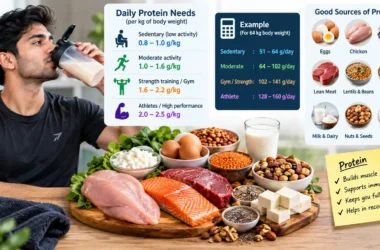
Protein and fiber keep you full longer than refined carbs do. Add eggs, Greek yogurt, beans, chicken, or lentils to meals, and pair them with vegetables or fruit. You’ll naturally eat less of the higher-calorie stuff without ever “restricting” anything.
You don’t need a scale. Just picture your plate: half vegetables and fruit, a quarter whole grains, a quarter protein. That’s the same balance Harvard’s Healthy Eating Plate recommends, and it works without a single calorie counted.
2. Move More During the Day, Not Just at the Gym
A single 45-minute workout matters less than you’d think if you sit for the other 15 hours of your day. Researchers call your everyday movement, pacing on a call, taking stairs, parking farther away, NEAT (non-exercise activity thermogenesis). Mayo Clinic researcher Dr. James Levine found NEAT can vary by up to 2,000 calories a day between two people of similar size.
Walk while you’re on phone calls. Take the stairs. Get up every hour. These small moves add up faster than most people expect.
3. Hit 150 Minutes of Activity a Week, In Any Order
The CDC recommends at least 150 minutes of moderate activity a week for adults. That could mean a 22-minute walk daily, or three 50-minute sessions. It doesn’t have to be a gym class. Brisk walking counts.
4. Slow Down at Meals
Eating fast means you finish before your brain registers you’re full, that signal takes about 20 minutes. Put your fork down between bites. Sip water. Talk more at the table. You’ll naturally stop eating sooner, without ever thinking about “portion control.”
5. Fix Your Sleep First
Poor sleep throws off the hormones that control hunger, ghrelin goes up, leptin goes down, and you crave more food the next day. Harvard Health notes that inadequate sleep is directly linked to weight gain. Aim for seven to eight hours before you touch anything else on this list. It’s the habit most people skip, and it’s often the one holding everything back.
6. Swap Sugary Drinks for Water
Soda, sweetened coffee, and juice add calories your body doesn’t register the way it registers food, so it’s easy to drink 300 extra calories and still feel hungry. The CDC points out that water has zero calories, making it one of the simplest swaps you can make. Try it for two weeks and see how you feel.
7. Notice the Difference Between Hunger and Boredom
Not every urge to eat is physical hunger. Ask yourself before a snack: am I actually hungry, or stressed, bored, or tired? This one question, recommended by Harvard Health researchers, catches a huge amount of “invisible” eating most people never track.
8. Set Up Your Kitchen to Help You
Keep fruit on the counter and chips in the back of a high cabinet. You’ll reach for whatever’s easiest, so make the easy choice the healthy one. This isn’t willpower. It’s just rearranging your environment so good choices take less effort than bad ones.
9. Track Loosely, Not Obsessively
You don’t need to log every gram. A quick weekly weigh-in, plus a rough note of your activity, is enough. The CDC found that people who kept weight off long-term typically monitored their progress, but “monitoring” can be a simple weekly check-in, not an hourly food diary.
10. Aim for 1 to 2 Pounds a Week
Losing weight faster than that usually means muscle loss, not just fat loss, and it’s harder to sustain. The CDC’s guidance is clear: people who lose weight gradually are more likely to keep it off than people who lose it fast. Even losing just 5% to 10% of your body weight brings real health benefits, lower blood pressure, better blood sugar, less strain on your joints.
A Simple Weekly Starting Point
| Habit | What It Looks Like |
| Protein + fiber first | Add eggs, beans, or yogurt to breakfast |
| Move more | Walk during phone calls |
| 150 min/week activity | 3 walks of ~50 minutes |
| Sleep | 7-8 hours nightly |
| Water | Swap 1 sugary drink a day |
| Weigh-in | Once a week, same day/time |
Pick two or three from this list. Don’t try all ten at once, that’s just a strict diet wearing a different outfit. Add one new habit every couple of weeks instead.
Frequently Asked Questions
Can you really lose weight without counting calories? Yes. A calorie deficit still has to happen for weight loss, but you can create it through portion awareness, more movement, and better food choices, without logging every bite. Research from Harvard Health and the CDC both support habit-based approaches over strict tracking for long-term success.
How much weight can I lose in a month without dieting? A safe, sustainable pace is about 4 to 8 pounds a month (1 to 2 pounds a week), based on CDC guidance. Faster loss is possible but harder to maintain and more likely to include muscle loss.
Do I need to cut out carbs or sugar completely? No. Complete elimination tends to backfire because it feels like punishment. Reducing portions and swapping sugary drinks for water usually works better long-term than an all-or-nothing rule.
What’s the single best habit to start with? Sleep. Poor sleep disrupts hunger hormones and undoes progress from diet and exercise. Fixing sleep first makes every other habit on this list easier to follow.
Is walking enough exercise to lose weight? Walking briskly for 150 minutes a week meets the CDC’s minimum activity guideline and supports weight loss when paired with basic eating habits. It’s a realistic starting point for most people.
How long until I see results without a strict diet? Most people notice changes in energy and how clothes fit within 3 to 4 weeks. Visible weight loss on a gradual plan (1-2 lbs/week) typically shows up on the scale within 4 to 6 weeks.
The Bottom Line
Losing weight without a strict diet isn’t a shortcut, it’s actually the approach backed by the most research on who keeps weight off long-term. Pick two habits from this list, give them three weeks, then add another. That’s it. No meal plan required.
This article is for general information and isn’t a substitute for medical advice. Talk to your doctor before starting a new weight-loss or exercise plan, especially if you have an existing health condition.